
By Victor Kuarsingh
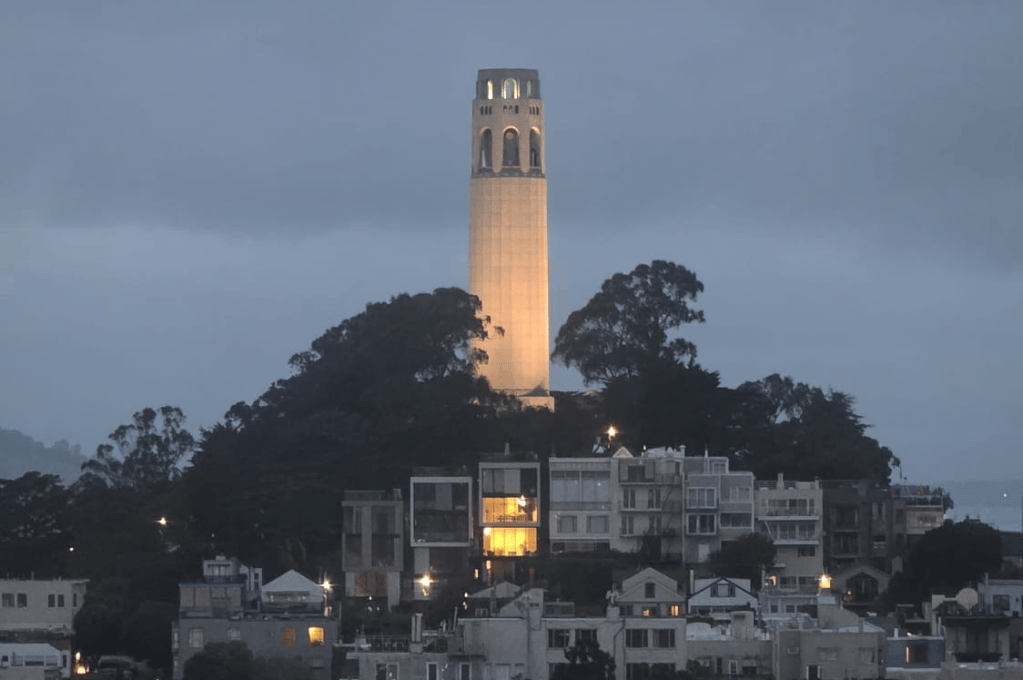
I woke up early in San Francisco this week with the blinds open, the sky still dark, cold, and night. Looking out at Coit Tower from my hotel window, I couldn’t help but ask myself — “what is a sunrise to others on a given day?” Waking up early or late certainly has a significant bearing on this, but I also realized that even without traveling, where you live may impact one’s experience. Those of us who have lived in very northern or southern latitudes know there’s a large difference between summer and winter, with a gradual increase and decrease in daylight hours.
I also realized that, outside of this, where one lives impacts when the sun comes up and what the start of a day means. So again — “what is a sunrise to you?” It turns out that’s not a trivial question, and the answer isn’t just about discipline or being a “morning person.” It also has a lot to do with longitude.
Time zones are political. The sun is not. Each zone is a roughly fifteen-degree wedge of the earth, and one clock is asked to govern all of it — sunrise and sunset drift by as much as an hour across that wedge, even though every watch inside it says the same time. In a given time zone, one person can be waking up to a 6 AM sunrise slowly slipping into the day, while someone else wakes up to pitch black, fighting their body’s interpretation that “it’s still night.” By 9 AM, our eastern-biased friend is “ready to go,” and our western-biased friend is “still grappling with their start.”
Chronobiologists have a name for what happens next: social jetlag. It’s usually used to describe the gap between when your body wants to sleep and when your calendar makes you — most familiarly, the whiplash between a Friday-night bedtime and a Monday alarm. But a 2019 study in the Journal of Health Economics (Giuntella & Mazzonna) found the same mismatch happening geographically, quietly, every single day, to people who never cross a time zone at all. They just live on the wrong side of one.
The mechanism is almost absurdly simple. An extra hour of evening light delays the body’s release of melatonin. Bedtime drifts later while one’s alarm clock remains steadfast. Across US time-zone borders, that’s worth about 19 minutes of sleep a night, on average — not dramatic on any one night, but compounding, year after year, into measurably higher rates of obesity, diabetes, and cardiovascular disease, and into a subtle but real drag on regional income.
I have spent a lot of time between Toronto and Miami, both several degrees of longitude into the “late” side of Eastern time — later sunrise and sunset on the clock than cities like Montreal or New York, though neither is the most extreme case. That distinction goes to Detroit, which is geographically so far west it sits past the traditional Eastern time boundary, yet still runs on Eastern clocks. Its residents get the latest sunsets, and the latest, most reluctant sunrises, of any major Eastern city. But Miami and Toronto are both, in this particular sense, on the same side of the ledger as Detroit — cities where the sun shows up on the clock a little later than it “should,” and where 9 AM asks something of the body that the sky hasn’t quite delivered yet.
None of this is really about sunrise trivia. It’s about the fact that “a standard workday” is a fiction we apply uniformly to a population that does not experience the day uniformly. The same start time that feels natural in one city is a small, silent tax on another — paid in sleep, in health, and apparently in income. We’ve spent a lot of energy optimizing how people work. We’ve spent almost none asking where they’re doing it from, and what the sky outside their window actually looks like at 7 AM.
So: what time do the people you work with actually wake up? And when they do — do they see the sun?


