
By Victor Kuarsingh
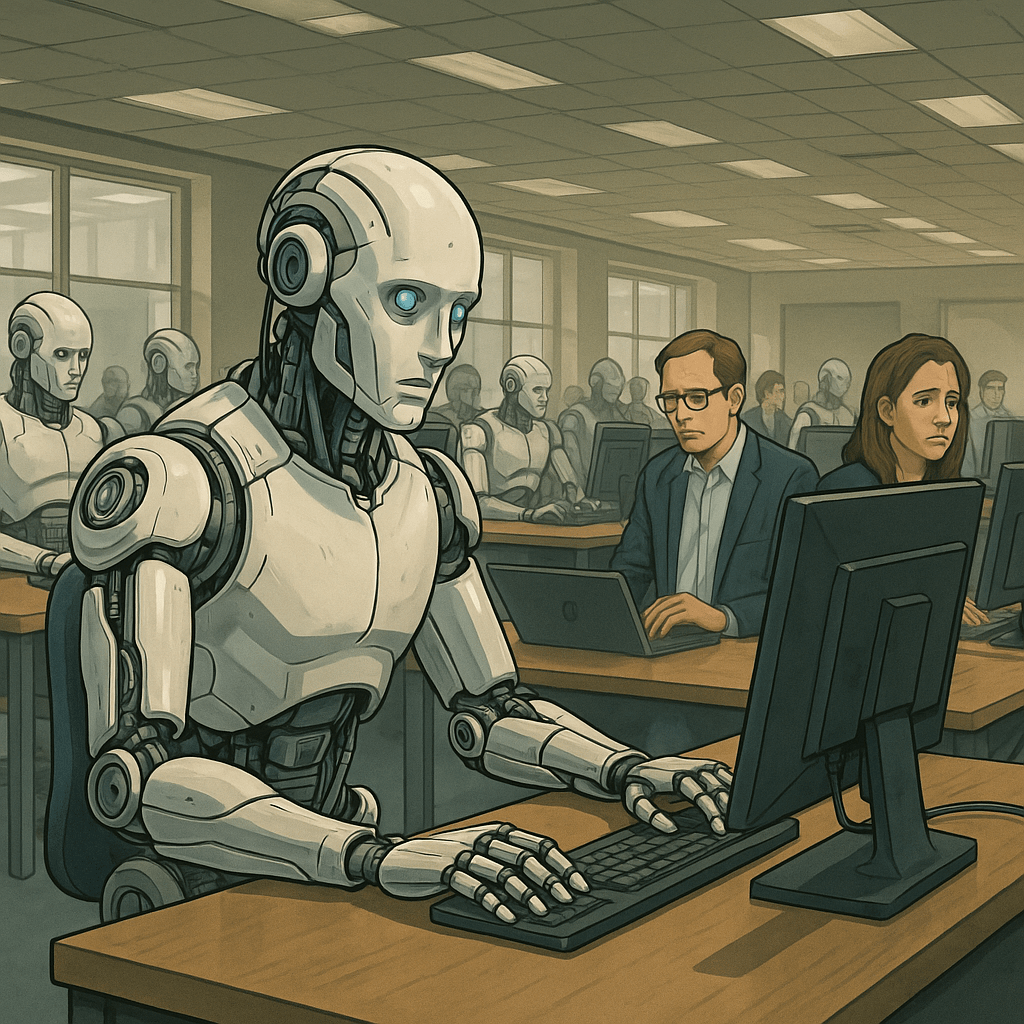
While the current buzz around AI has sparked curiosity for some and absorbed the attention of others, it has also created a sense of fear among those who believe AI may ultimately replace their jobs. There is of course a class of people who may not know what to think.
While the exact path of AI’s integration into the modern workplace remains uncertain, one thing is undeniable: its capabilities are accelerating at a staggering pace, and the disruption it brings is no longer a question of if, but when, how and where.
Highlighted in Our World in Data (Data source: Kiela et al), by 2023 AI was already outperforming [average] humans in reading comprehension, image recognition, and language understanding—while matching us in handwriting recognition, and speech recognition. Predictive reasoning, math problem solutioning, code generation and complex reasoning were all getting close. And that was two years ago. Since then, AI’s capabilities have been doubling every ~7 months, according to Metr.org with AI’s ability to accomplish larger tasks.
Some argue that focusing on labor-intensive work or roles that seem to inherently require human involvement might offer temporary protection from AI and related future automation. Yet, advances in robotics are rapidly encroaching on even these opportunities.
While none of us can predict with certainty what the next 5–10 years will bring, one thing is clear: the ability to adapt, evolve, and embrace change will be essential for achieving success in the workforce of the future. So to answer, “Will AI Take my job?” – Maybe.
References:
Measuring AI Ability to Complete Long Tasks (METR)
AI Test Scores (Our World in Data)

 Victor K's Stream of consciousness